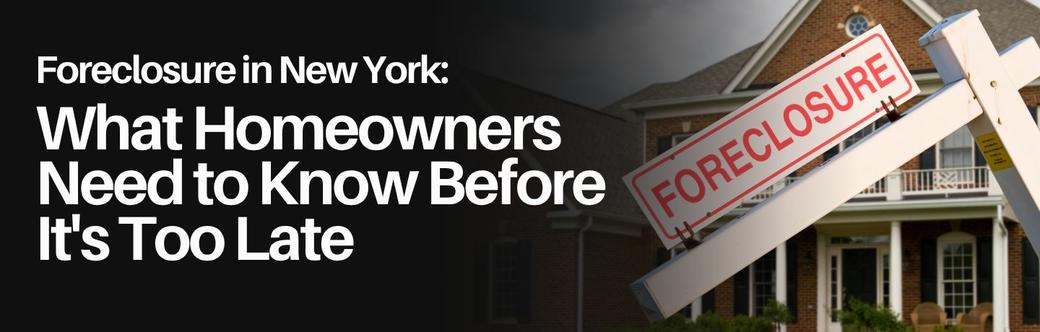
Foreclosure in New York: What Homeowners Need to Know Before It's Too Late
Falling Behind on Mortgage Payments? Here's What Homeowners Should Know
Falling behind on mortgage payments can happen faster than many homeowners expect.
What starts as one missed payment can eventually lead to late fees, lender notices, legal filings, and in some cases, foreclosure.
The good news is that foreclosure rarely happens overnight. In New York, homeowners often have more time and more options than they realize especially when they take action early.
Understanding the New York foreclosure process, recognizing the warning signs, and exploring available solutions can make a significant difference in the outcome.
Whether you're currently behind on mortgage payments or simply want to understand your options, this guide explains what homeowners should know about foreclosure in New York and the steps that may help protect their financial future.
What Is Foreclosure?
Foreclosure is the legal process a lender may use to recover a property when mortgage payments remain unpaid for an extended period of time.
In simple terms, if a homeowner falls behind on their mortgage and the situation is not resolved, the lender can eventually seek to take ownership of the property through the court system.
In New York, foreclosure is a judicial process, meaning it goes through the courts and often takes longer than in many other states. While that timeline can provide homeowners with additional opportunities to explore solutions, taking action early is often the best way to preserve available options.
A mortgage default in New York does not automatically mean a homeowner will lose their property. However, understanding the process early can help homeowners evaluate available options before the situation becomes more difficult to resolve.
The process typically begins with missed mortgage payments and may progress through lender notices, default communications, legal filings, settlement conferences, and eventually a court-supervised resolution if the issue remains unresolved.
Why Are More Homeowners Facing Foreclosure Today?
Financial hardship rarely happens because of a single event.
For many homeowners, it is the result of several challenges occurring at the same time.
Rising property taxes, higher insurance premiums, inflation, increasing household expenses, medical bills, and unexpected life events can place significant pressure on a family's finances. In other situations, homeowners may experience a job loss, reduced income, business slowdown, divorce, or changes within the household that make monthly payments more difficult to manage.
For homeowners with adjustable-rate mortgages, payment increases can create additional financial strain, especially when combined with higher living costs.
These situations are more common than many people realize, and they often develop gradually over time. Understanding these challenges helps explain why foreclosure activity has increased in many communities across New York and throughout the country.
What the Numbers Are Telling Us Right Now
The broader real estate market has been shifting.
Across the United States, foreclosure activity increased during 2025. According to ATTOM, more than 101,000 properties had foreclosure filings during the third quarter of 2025, reflecting continued year-over-year increases in foreclosure activity.
The increase in foreclosure in New York has been especially noticeable in recent years as more homeowners face rising costs and financial pressures.
New York remained one of the states with the highest levels of foreclosure activity in 2025, ranking among the leaders nationally for foreclosure starts.
Within New York City specifically:
- First-time foreclosure filings rose 8% year over year in 2025, totaling nearly 1,600 new cases
- Queens recorded the most filings with 587, representing roughly 37% of all citywide cases
- Manhattan reached its highest foreclosure figure since 2010, a 28% increase
- The Bronx saw filings climb by 35%
- Brooklyn followed closely with 460 filings
And early 2026 data suggests the trend is continuing.
These numbers are not meant to alarm. They are meant to inform.
Because behind every filing is a homeowner, and many of those homeowners could have benefited from understanding their options sooner.
For homeowners in New York City, these trends are being seen across Brooklyn, Queens, the Bronx, and Manhattan. While every neighborhood and property is different, foreclosure activity has increased throughout many parts of the city, making it even more important for homeowners to understand their options and available resources early in the process.
Sources: ATTOM Data Solutions, PropertyShark Market Reports, and publicly available foreclosure filings and market data.
Common Warning Signs That Homeowners Shouldn't Ignore
Foreclosure rarely happens without warning. In many cases, homeowners experience financial strain months before legal proceedings begin.
Some common warning signs include:
- Missing one or more mortgage payments
- Receiving letters or notices from a mortgage servicer
- Using credit cards to cover monthly housing expenses
- Falling behind on property taxes
- Receiving notices regarding property liens or judgments
- Struggling to keep up with homeowners insurance premiums
- Falling behind on utility bills or other housing-related expenses
- Borrowing money repeatedly to make mortgage payments
- Experiencing a job loss, medical hardship, or significant reduction in income
Recognizing these warning signs early may help homeowners avoid foreclosure in New York and preserve more available options.
Many homeowners first encounter these challenges during the pre-foreclosure stage, when proactive action may still provide additional flexibility and potential solutions.
Why Waiting Often Makes Things More Expensive
Many homeowners delay taking action because they hope the situation will improve on its own.
Unfortunately, mortgage delinquency often becomes more expensive over time.
Additional late fees, legal costs, interest charges, and other penalties can accumulate quickly.
As missed mortgage payments continue, credit damage may increase, and lenders may begin taking additional collection or legal actions.
The longer a situation remains unresolved, the fewer foreclosure options may remain available.
While every homeowner's circumstances are different, addressing financial challenges early often creates more opportunities for finding a workable solution.
Time is one of the most valuable resources available during a mortgage hardship situation.
One of the Biggest Mistakes Homeowners Make
One of the most common patterns professionals see is that homeowners often wait too long before exploring their options.
Sometimes people avoid opening letters from lenders because they are worried about what they might say. Others hope the situation will improve on its own or simply feel overwhelmed and unsure where to begin.
The challenge is that waiting can limit the number of solutions available.
Seeking information early does not mean giving up your home. It simply means understanding your options while more options are still available. Many homeowners discover they have more flexibility and more resources than they initially expected.
What Are My Options if I'm Facing Foreclosure in New York?
Many homeowners assume foreclosure is unavoidable once payments are missed. In reality, there may be several foreclosure options available depending on the circumstances.
Loan Modification
A loan modification changes one or more terms of the mortgage to create a more affordable payment structure. This may involve extending the loan term, adjusting the interest rate, or restructuring the balance.
Mortgage Forbearance
Mortgage forbearance allows qualified homeowners experiencing temporary financial hardship to pause or reduce mortgage payments for a specific period of time.
Repayment Plans
Some lenders offer repayment plans that allow homeowners to catch up on missed payments gradually rather than paying the entire amount at once.
Refinancing
Depending on credit, income, and available equity, refinancing may help some homeowners obtain different loan terms that better fit their current financial circumstances.
Selling Before Foreclosure
For some homeowners, selling the property before foreclosure may provide greater control over timing, finances, and future housing decisions. In some situations, choosing to sell before foreclosure may help preserve equity and avoid additional legal complications.
Resolving Property Liens
Addressing outstanding property liens early may simplify future transactions and help homeowners preserve additional options.
Negotiating With Lenders
Many lenders are willing to discuss hardship solutions, repayment arrangements, or alternative resolutions when homeowners communicate early in the process.
Legal Assistance
Real estate attorneys can help homeowners understand legal notices, foreclosure proceedings, settlement conferences, and available protections under New York law.
Homeowner Assistance Programs
New York homeowners may qualify for homeowner assistance programs, counseling services, mediation programs, or legal aid resources designed to help individuals facing mortgage hardship.
Many homeowners searching for ways to stop foreclosure may have more options available than they realize. Taking action early often creates more opportunities to work with lenders, explore assistance programs, and evaluate alternative solutions.
Every situation is unique. The right solution depends on a homeowner's financial circumstances, available equity, loan type, and long-term goals.
What Is a Property Lien?
A lien is a legal claim attached to a property because of an unpaid obligation.
Property liens may arise from:
- Unpaid property taxes
- Contractor or mechanic claims
- Outstanding mortgage obligations
- Court judgments
- Certain government-related debts
A lien does not automatically mean foreclosure is imminent. However, property liens can complicate refinancing, property transfers, and future sales if they remain unresolved.
Understanding any liens affecting a property is an important part of evaluating available foreclosure options. Homeowners who are unfamiliar with how liens work may also benefit from learning more about property liens and how they can affect ownership, refinancing, and future transactions.
Why Home Equity Matters
Even homeowners who are behind on mortgage payments may still have substantial equity in their homes.
Home equity represents the difference between a property's market value and the amount owed on the mortgage and other secured obligations.
Understanding a property's current value can help homeowners evaluate potential options, including refinancing, negotiating with lenders, resolving debt obligations, or selling before foreclosure progresses further.
Many New York homeowners are surprised to learn that they still have meaningful equity despite financial hardship. Knowing that equity position can play an important role in future decision-making.
For homeowners facing foreclosure in New York, understanding available equity can be an important factor when evaluating refinancing opportunities, negotiating with lenders, or deciding whether selling the property may be beneficial.
You Are Not Alone
Financial hardship related to homeownership is more common than many people realize.
Across New York, homeowners face challenges related to job loss, medical expenses, inflation, changing household circumstances, and rising housing costs.
Seeking information is not a sign of failure. It is a practical step toward understanding available options and making informed decisions.
The homeowners who often have the most flexibility are those who begin asking questions before their situation becomes urgent.
Where to Begin
There is no one-size-fits-all solution for homeowners facing financial challenges.
However, several resources may help provide clarity:
Contact Your Mortgage Servicer
Many lenders offer hardship assistance, loss mitigation programs, loan modification opportunities, and repayment solutions for qualified borrowers.
Speak With a HUD-Approved Housing Counselor
Housing counselors can provide guidance regarding mortgage hardship, budgeting, foreclosure prevention, and available assistance programs.
Consult a Real Estate Attorney
This can be especially important when title issues, liens, probate matters, or inherited property concerns are involved. Homeowners dealing with title-related concerns may also find it helpful to understand the role of title companies and title insurance during real estate transactions.
Explore State and Local Assistance Programs
New York homeowners may have access to financial assistance resources, counseling programs, legal aid services, and foreclosure prevention initiatives.
Talk With an Experienced Real Estate Professional
Understanding your property's market value and available options may help support informed decision-making.
Homeowners seeking foreclosure help in New York may benefit from speaking with housing counselors, real estate attorneys, lenders, and experienced real estate professionals who understand the New York foreclosure process.
The goal is not to make a rushed decision. The goal is simply to understand what options exist while the greatest number of options remain available.
FAQs: Foreclosure in New York, Missed Mortgage Payments, and Homeowner Options
What happens if I miss a mortgage payment?
Missing one payment does not automatically trigger foreclosure. However, missed mortgage payments can result in late fees, credit impacts, and lender communications. Reaching out to your mortgage servicer early is often beneficial.
How long does foreclosure take in New York?
Because New York uses a judicial foreclosure process, cases often take significantly longer than in many other states. Timelines vary depending on the circumstances of each case.
What is pre-foreclosure?
Pre-foreclosure refers to the period after mortgage delinquency begins but before a foreclosure sale occurs. During this stage, homeowners may still have multiple options available.
Can I stop foreclosure after receiving notices?
Depending on the circumstances, homeowners may still be able to pursue loan modifications, repayment plans, mortgage forbearance, legal remedies, or other solutions. The sooner action is taken, the more options may be available.
What is a property lien?
A property lien is a legal claim against a property due to an unpaid obligation. Property liens can affect refinancing, sales, and ownership transfers.
Are there homeowner assistance programs available in New York?
Yes. Various state, local, nonprofit, and housing counseling programs provide assistance to homeowners facing mortgage hardship.
Should I sell before foreclosure?
For some homeowners, selling before foreclosure may be an option worth exploring. The right decision depends on factors such as equity, financial circumstances, and long-term goals.
The Most Important Step Is Taking Action Early
While every homeowner's situation is different, delaying action can make it more difficult to access certain solutions and resources that may be available earlier in the process.
The earlier homeowners understand their options, the more flexibility they typically have.
Whether the best path involves working with a lender, resolving liens, exploring homeowner assistance programs, seeking legal guidance, or evaluating a potential sale, taking action early can make a meaningful difference.
Understanding your home's value, your equity position, and the options available to you can help you make informed decisions before financial challenges become more difficult to manage.
Many homeowners are surprised to learn that they have more options than they initially thought.
Understanding your situation early, before additional fees, legal actions, or financial pressures accumulate, can often create more flexibility and better outcomes.
The most important step is simply starting the conversation and understanding what options may be available to you.
If you're a New York homeowner facing financial uncertainty, taking the time to gather information and explore your options may be one of the most important steps you can take.
Clear information. Trusted guidance. And more options than many homeowners realize.
Categories
Recent Posts