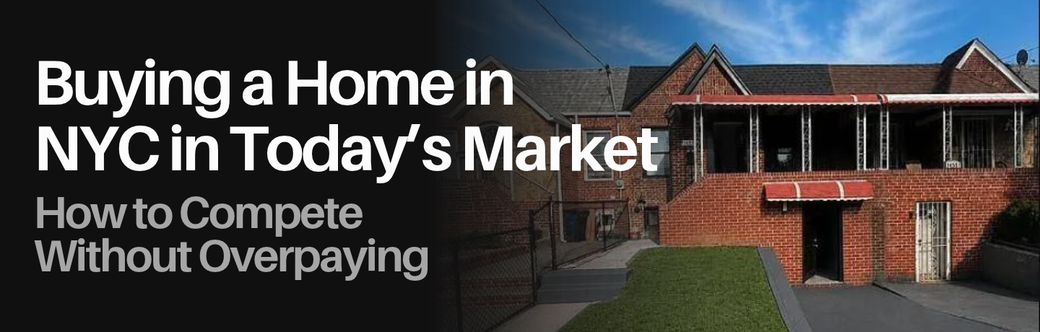
Buying a Home in NYC in Today’s Market: How to Compete Without Overpaying
Practical advice for buyers in Brooklyn and Queens
Buying a home in New York City takes more than finding a property you like. In Brooklyn and Queens, buyers need to understand local prices, look beyond the asking price, and know what to check before making an offer.
A competitive market can create pressure to move quickly or offer more than planned. But a strong offer is not always the highest one. Preparation, a clear understanding of the property, and the right guidance can help you make a confident decision without stretching your finances too far.
What the Latest Market Numbers Tell Buyers
According to StreetEasy’s August 2026 NYC housing market report, published September 15, 2026, 31.9% of homes sold above their latest asking price in Brooklyn, compared with 24.2% in Queens. Brooklyn had 4,016 homes for sale, while Queens had 3,231. Inventory was down 0.5% year over year in Brooklyn and up 3.3% in Queens.
Source: StreetEasy’s August 2026 NYC Housing Market Report.
These borough-wide figures show that competition can vary between markets, but they do not tell you what a particular home is worth. Prices and demand can differ significantly by neighborhood, property type, condition, and location.
For example, a buyer considering a single-family home in Queens may face a different set of choices and competing offers than someone looking for a two-family property in Brooklyn. Reviewing recent comparable sales in the same neighborhood is a better starting point than assuming every home will sell above asking.
1. Decide What the Property Is Worth Before Increasing Your Offer
When a home attracts several interested buyers, it can be tempting to raise your offer quickly. Before doing that, look at recent sales of similar properties, the home's condition, and any work it may need.
In Brooklyn, for example, a renovated townhouse and a similar-sized property that needs substantial repairs may have very different values. In Queens, two single-family homes on nearby blocks can also differ in value depending on their condition, layout, and permitted use.
Consider the full cost of ownership, not just the purchase price. Repairs, property taxes, insurance, and ongoing maintenance can affect what you can comfortably afford after closing.
Set your maximum budget before submitting an offer. If the price moves beyond that limit, be prepared to step back. Buying the right home matters more than winning every bidding situation.
2. Understand the Difference Between Single-Family and Two-Family Homes
Brooklyn and Queens offer buyers a range of property types, including single-family houses and two-family homes. The right choice depends on your plans, budget, and how you intend to use the property.
A single-family home may suit buyers who want the property primarily for their own household. A two-family home may offer the possibility of living in one unit while renting the other, subject to applicable rules and the property's legal status.
Before purchasing a two-family property, verify its legal use and the approved number of dwelling units. Do not assume that a finished basement, a separate entrance, or a second kitchen automatically makes a space a legal apartment.
If rental income is part of your financial plan, also account for potential vacancies, maintenance, insurance, and other landlord responsibilities. Expected rent should not be treated as guaranteed income.
3. Check Property Records, Violations, and Open Permits
A property's appearance does not tell you everything about its history or legal status. Before committing to a purchase, review the available building records and discuss any concerns with your real estate professional, attorney, and qualified inspectors or contractors.
In New York City, buyers can use the Department of Buildings' online resources to review information about a property's violations and building records.
Start with the official NYC Department of Buildings Violations page. You can also review the department's Building Information System and DOB NOW for relevant property information.
Pay particular attention to:
- Open violations: Find out what the violation concerns, whether it remains active, and what may be required to resolve it.
- Open permits or unfinished work: Ask whether renovations were properly permitted and whether required inspections or sign-offs have been completed.
- Legal use and occupancy: Confirm that the property's recorded use and number of units match your intended plans.
- Potential costs or delays: Ask the appropriate professionals how any unresolved issues could affect financing, closing, future renovations, or occupancy.
An online record is a starting point, not a complete assessment of the property. The meaning and implications of a violation or permit depend on the specific circumstances, so unresolved issues should be reviewed before you proceed.
4. Make Your Offer Stronger Without Automatically Paying More
Price matters, but it is not the only factor a seller may consider. A well-prepared offer can help demonstrate that you are serious and ready to move forward.
Before submitting an offer, consider these steps:
- Get a mortgage pre-approval. This helps you understand your financing position and shows the seller that you have taken an important step toward securing a loan.
- Prepare your documents. Work with your lender and attorney so you can respond promptly when information is needed.
- Be clear about your timeline. If your circumstances allow flexibility with the closing date, communicate that to the seller.
- Understand your contingencies. Financing, inspection, and other contract protections should be discussed with your attorney. Any changes should be made only after you understand the risks.
- Keep your offer realistic. A competitive offer should reflect the property's value and your financial limits, not simply the amount you think another buyer might pay.
For example, if two buyers make similar offers on a home in Queens, the seller may also consider their financing readiness and proposed timeline. This does not guarantee that one offer will be selected, but it shows why preparation and clear communication matter.
You can make an offer more attractive without automatically increasing the price or giving up important protections.
5. Understand the Appraisal and Financing Risks
Even when a seller accepts your offer, the process is not necessarily complete. If you are financing the purchase with a mortgage, your lender may require an appraisal to help assess the property's value.
Imagine you agree to buy a home for $800,000, but the appraisal comes in at $775,000. Depending on your loan terms and the lender's requirements, the lender may calculate its financing based on the lower appraised value. This could leave you needing additional funds or require further discussions before the purchase can move forward.
The options available depend on your mortgage, purchase contract, and circumstances. You may be able to discuss the appraisal with the lender, renegotiate with the seller, or consider other options with your attorney and lender. Whether you can withdraw without a financial consequence depends on the terms of your contract and any applicable contingencies.
This is one reason to be cautious about offering more than the available comparable sales support. Before making an offer, ask your lender and attorney what an appraisal shortfall could mean for your specific purchase.
6. Know When to Move Forward and When to Walk Away
Not every home that attracts strong interest is the right purchase. A property may look appealing but come with repair costs, unresolved building issues, or a price that no longer makes sense once you review comparable sales.
Before committing, ask yourself:
- Does the price make sense compared with similar properties nearby?
- Have I understood the property's condition and legal use?
- Can I comfortably afford the mortgage and ongoing ownership costs?
- Have I reviewed any concerns with the appropriate professionals?
- Would I still feel comfortable with this purchase if another buyer were not competing for it?
If the answers raise concerns, take the time to review them. Walking away from a property that does not fit your needs or budget can be a sensible decision, even in a competitive market.
Finding the Right Home Takes More Than Winning an Offer
Buying a home in Brooklyn or Queens is a major decision, and every property brings its own questions. The goal is not simply to make the winning offer. It is to find a home that fits your needs, understand what you are buying, and feel comfortable with the decision after closing.
At Lanciano Pizante, we believe the process should be built on clear communication, trust, and an understanding of what matters to you. Whether you are comparing single-family and two-family homes, reviewing a property's details, or preparing to make an offer, having the right guidance can help you approach each step with greater confidence.
If you are considering buying in Brooklyn or Queens, we would be happy to learn more about what you are looking for and help you navigate the process.
Categories
Recent Posts